History
Prehistory
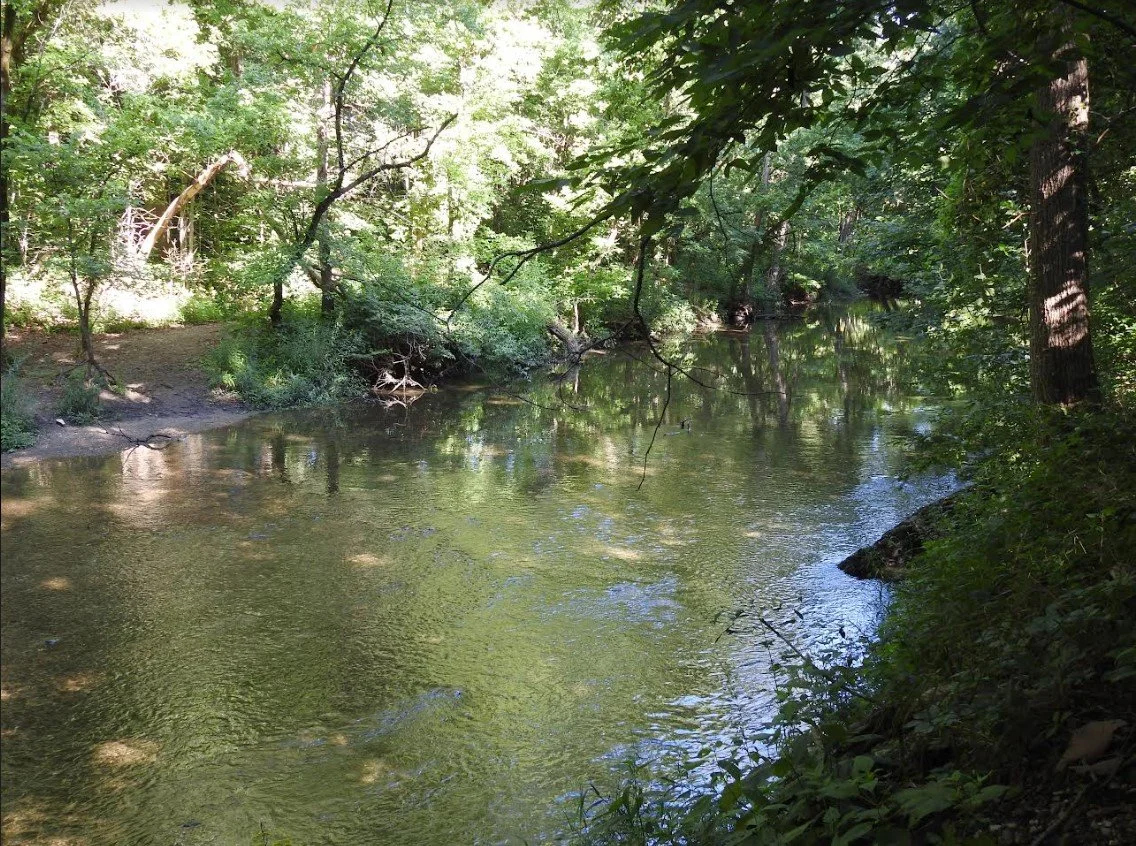
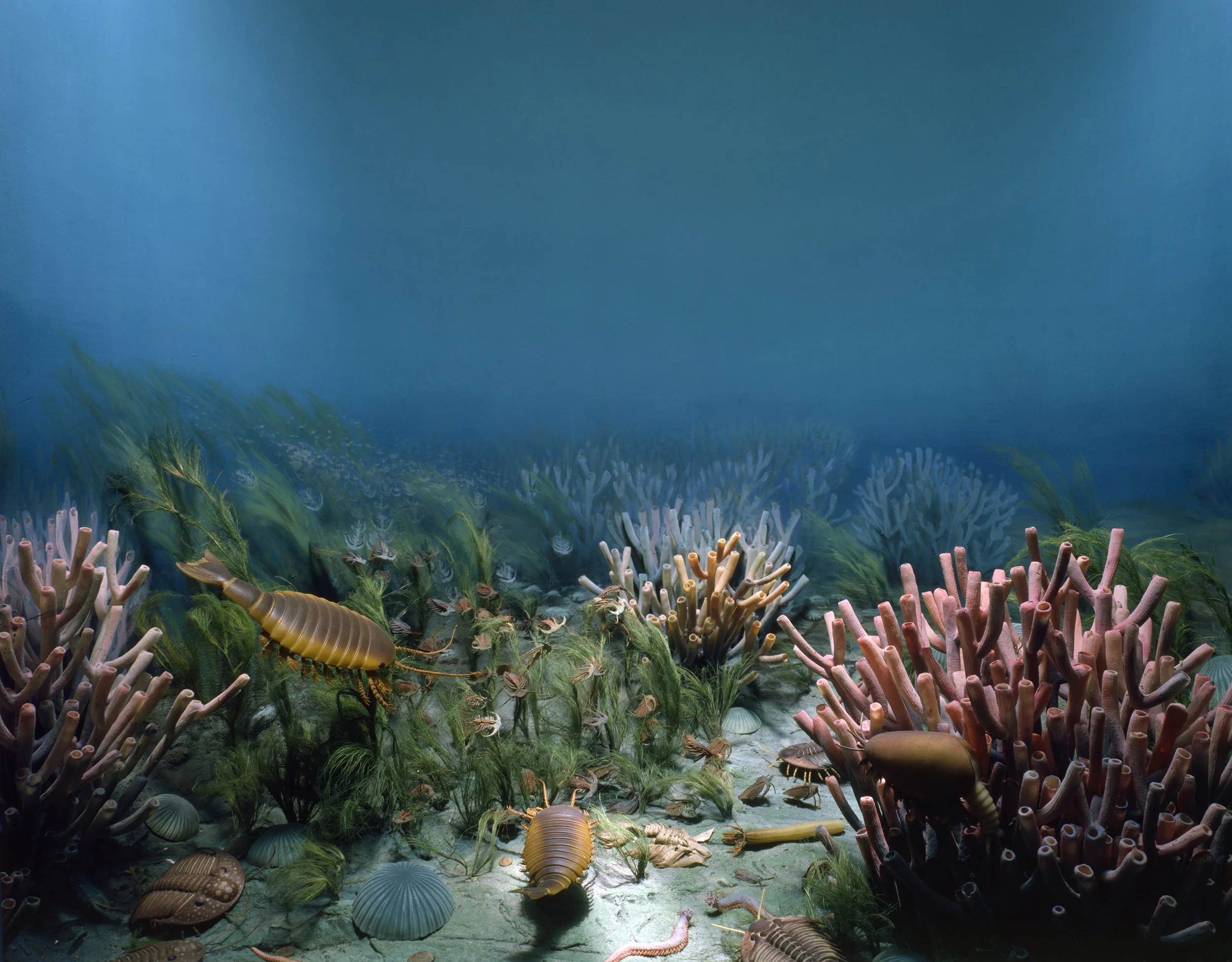
Millions of years ago, Indiana was a shallow, warm sea teeming with primordial sea life. Through great time and pressure, this sea life became the limestone that defines our geology today. We can still find their fossils along creek beds here. Millennia after rising out of the ocean through tectonic drift, glaciers moved back and forth over the northern regions of this land, grinding former mountains and hills down flat over centuries. When those glaciers finally receded over 10,000 years ago, they left in their wake a rich and deep soil. We see this evinced in our fecund farmland today. We can observe how far the glaciers traveled - where bedrock, ridges, and hills appear once more in the bottom third of our state after a largely flat north. That deep loam soil turned Indiana into a rich oak savannah, with enough trees that it is said a squirrel could cross the state without ever touching the ground. Large, now-extinct mammals roamed freely, such as the mastodons, giant ground sloths, and saber-toothed cats, which were larger than any feline walking the earth today. Early humans in the area nearly eradicated the large megafauna, and only 1% of that old-growth forest remains.
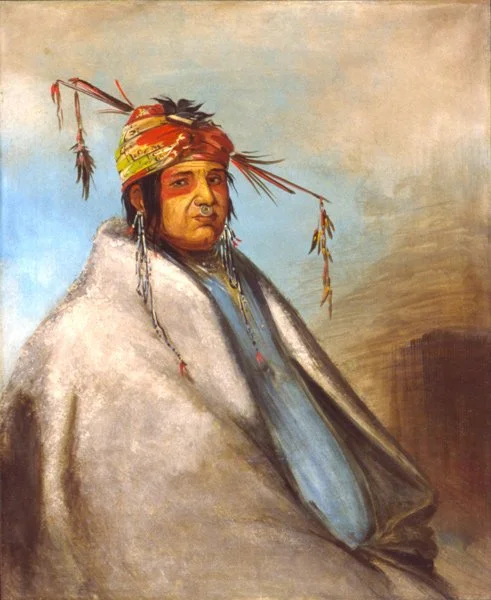

Non-on-dá-gon, a Chief
by George Catlin
Native History
Indiana is a state named after the Indigenous peoples who have called this land home since time immemorial. Indiana has been a site of human activity for more than 12,000 years. When Indiana was ceded to the United States by the Myaamia/Miami and Lenape/Delaware Nations through the Treaties of St. Mary’s in 1818, the population was under 100,000, with around 94,000 of those being non-white/Indigenous people. Now there are 7 million people here, including ancestors of the original Indigenous Nations.
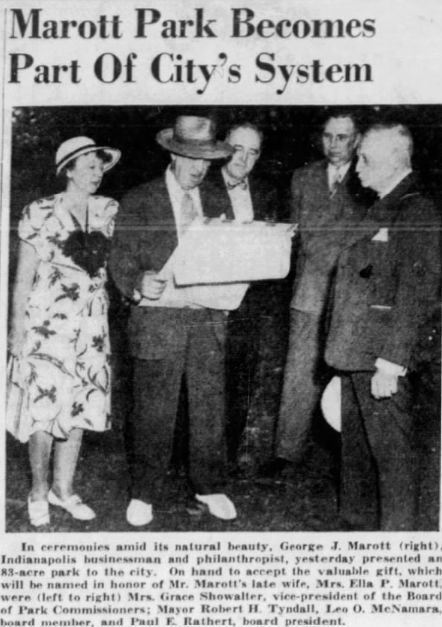
Indianapolis Star, June 29, 1945
Marott Era
George Marott immigrated from England in 1875 and opened his first shoe store in Indianapolis in 1884. A successful businessman, Marott went on to open a luxury hotel, now called The Marott Apartments on Meridian Street, and several other significant business ventures. In 1945, George had the generosity and vision to donate the land now known as Marott Woods Nature Preserve in memory of his beloved wife, Ella. George and Ella revered the land for its rare and natural beauty and wished it to be preserved for the benefit of wildlife.
In 1987, Marott Woods was established as an Indiana State Dedicated Nature Preserve. We are forever indebted to Marott’s foresight and generosity to bequeath this parcel of land for us all to enjoy in perpetuity.
For more in-depth Marott Woods history from local historian, Ed Fujawa: https://www.class900indy.com/post/preserving-the-natural-space-of-indianapolis-the-history-of-marott-woods