Geology & Hydrology
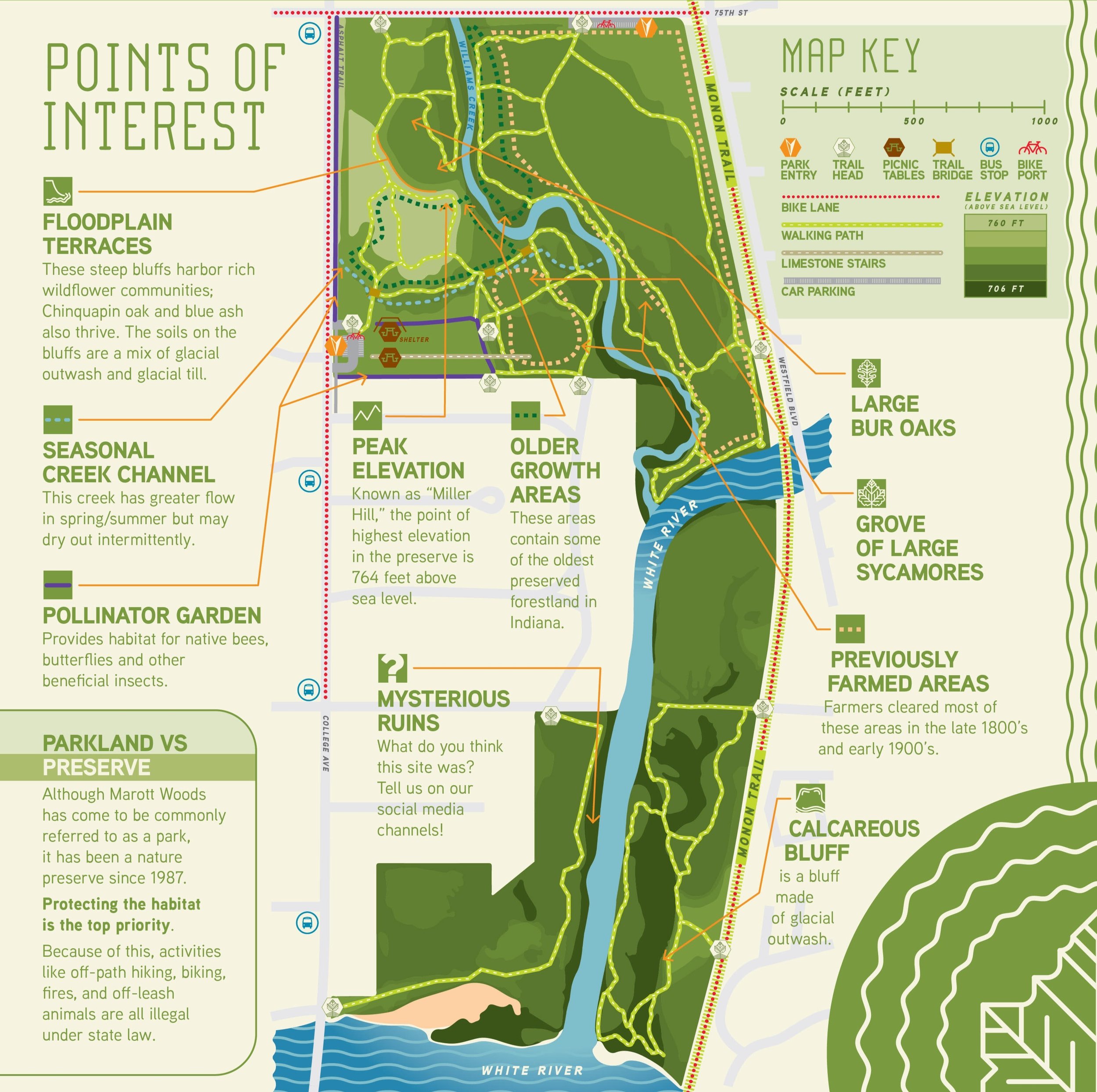
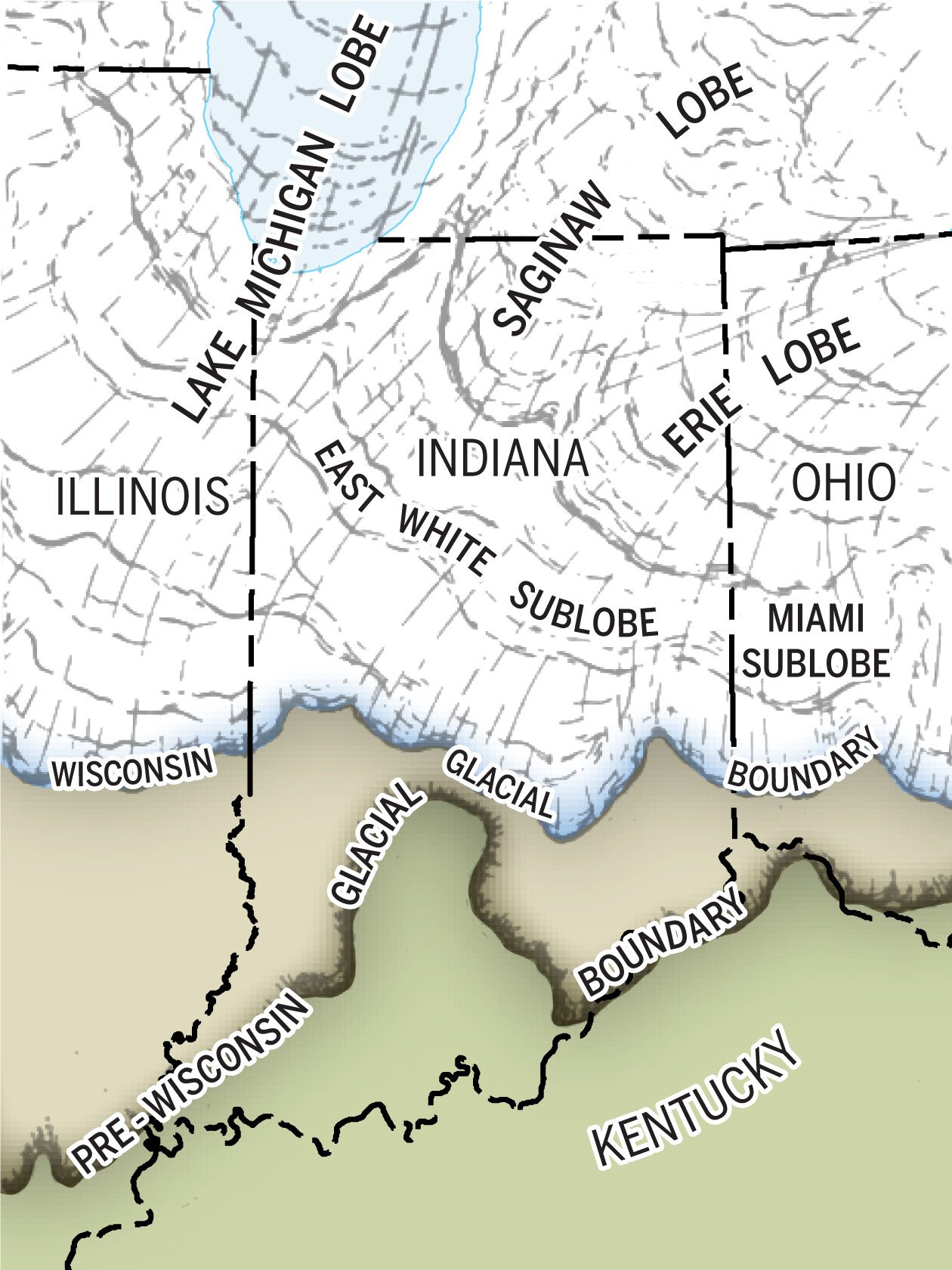
Marott Woods Nature Preserve is located near the geological border of the Tipton and New Castle Till Plains. The morphological features of this area, such as flatlands and rolling hills, were created by the movement of glaciers that entered Indiana around 2 million years ago during an Ice Age. This glaciation extended southward from Canada to the Ohio River. Around 22,000 years ago, the glacier moved back northward, leaving central Indiana around 18,000 years ago. This stage is the latter part of Wisconsin Glaciation. While the glacier retreated and melted, the materials deposited were mostly sand, gravel, and glacial till, which is soil ranging in size from clay to large boulders known as “glacial erratics.” Located in the northwest section of Marott, “Miller Hill” was formed by these glacial till deposits and is the highest point in the preserve at 764 feet above sea level.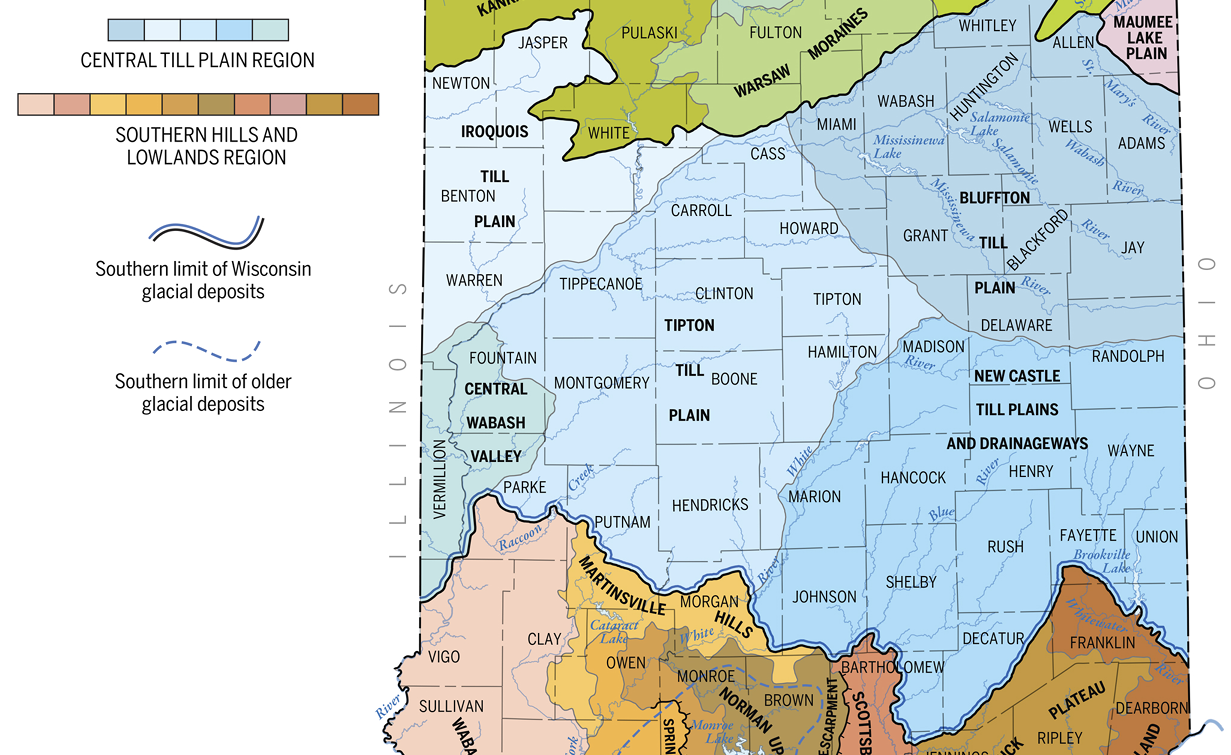
In addition to glacial till, glacial outwash is present along the flood plain terraces in the northwest section and the calcareous (chalky/limestone) bluffs in the southeast section of the preserve. Unlike glacial till, which contains various sizes of soil mixed together, outwash is formed by flowing water that deposits and sorts sediment particles by size. The calcareous bluffs in the southeast section occur along the former location of Williams Creek, which was rerouted in 1960-61 to help control flooding along this section of the White River. The floodplain areas along Williams Creek and the White River also contains alluvium, which is a mix of silt, sand, gravel, and clay. In addition to Williams Creek and the White River, there is an ephemeral stream in the northwest section of the preserve that flows from College Avenue to Williams Creek, especially during wetter periods in the late winter and spring. It is considered ephemeral or intermittent, since it only contains water at certain times.
More ecological info about Marott Woods Nature Preserve: https://static1.squarespace.com/static/613f575b7b37a401721548c9/t/63bc4d2e6fbcba59aecd9c78/1673284926956/MarottParkEcologicalProfile.pdf